
Throughout history, China has rarely engaged in large-scale, state-led overseas expansion. In contrast, Western nations, especially during the Age of Exploration, aggressively pursued global trade and colonial expansion through institutions like the East India Companies. Why did these two civilizations develop such fundamentally different approaches to overseas expansion?
1. The “Celestial Empire” Mindset vs. Expansionist Ambition
Traditional Chinese thought, deeply rooted in Confucianism, emphasized a “Middle Kingdom” worldview—China saw itself as the center of civilization, with little need to seek resources or markets abroad. Overseas trade was viewed as a supplement, not a necessity, and was often tightly controlled by the state.
Meanwhile, Western nations, especially during the 16th to 19th centuries, were driven by mercantilism and competition. European powers, constrained by limited land and resources, saw overseas expansion as a vital means to sustain economic growth. Trade, territory, and military power were inseparable, leading to the establishment of state-backed enterprises like the British and Dutch East India Companies, which acted as both commercial and military forces in foreign lands.
2. Agrarian Stability vs. Maritime Opportunism
China’s economic model was based on agriculture, which encouraged a stable, self-sustaining society. Land ownership and domestic markets were key economic drivers, reducing the urgency to explore new trade routes. Even when maritime trade flourished in certain dynasties, it was often seen as secondary to land-based wealth.
In contrast, Europe’s geography, particularly for nations like the Netherlands, Portugal, and England, necessitated a maritime economy. Limited farmland and fragmented political entities meant that survival and economic growth depended on external trade, conquest, and colonization. This difference fueled a risk-taking, expansionist mentality that saw the ocean as a frontier of opportunity rather than a barrier.
3. Government Control vs. Private Enterprise Expansion
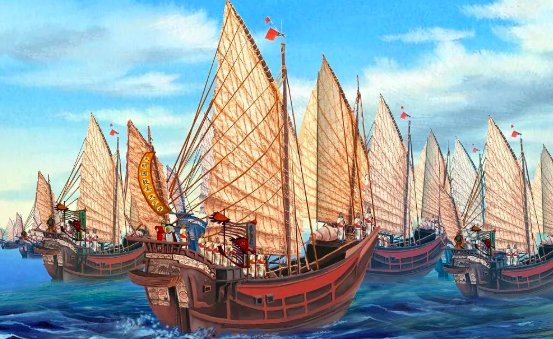
Another fundamental difference lies in who led the expansion. In China, major overseas ventures were state-controlled—such as Zheng He’s expeditions (1405-1433)—which were more focused on diplomatic presence and geographic mapping rather than economic or military dominance. Once the government deemed such expeditions unnecessary, they ceased.
Conversely, Western nations fostered hybrid models of government-backed yet privately operated enterprises. The East India Companies were corporations with quasi-sovereign powers, including the ability to wage war, negotiate treaties, and establish colonies. This allowed European expansion to be sustained even when governments lacked direct resources to fund overseas endeavors.
4. A Shared Future: Why East and West Must Cooperate Despite Rising Geopolitical Tensions
Historically, the West pursued aggressive global expansion driven by competition for resources, trade dominance, and technological advancement, while China followed a more self-contained approach, relying on a vast domestic economy and state-controlled international engagement. However, in today’s interconnected world, neither model can function in isolation.
- Interdependence is Unavoidable – Supply chains, financial markets, and technological ecosystems are deeply intertwined. Even amid geopolitical frictions, Western companies rely on China’s manufacturing and consumer markets, while China depends on Western innovation and global trade networks.
- Innovation Requires Cross-Border Collaboration – The greatest technological breakthroughs—whether in AI, renewable energy, or biotech—emerge from international cooperation. Isolationist policies stifle growth, while partnerships accelerate progress.
- Sustainability and Global Challenges Demand Joint Solutions – Climate change, food security, and public health crises are not national problems—they are global ones. Addressing them effectively requires joint investments, shared expertise, and coordinated policies.
The world is shifting from a zero-sum mindset to an era where mutual prosperity is the only sustainable path. The question is not “Which side will win?”, but rather “How can we build a system where both can thrive?” Instead of reinforcing divisions, the focus should be on leveraging each other’s strengths to create a more resilient and balanced global economy.
Visit our website: http://www.wantunmedia.com
Email: contact@wantunmedia.com
 Wantun Media