
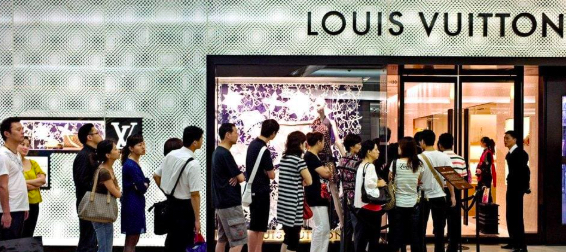
🌍 1. The End of the “Dreamer” Era in Europe
📉 Economic stagnation has reshaped European consumer behavior. Gone are the days when luxury goods symbolized aspiration. With no expectation of exponential economic growth, Europeans have moved from being “dreamers” seeking external validation to “lifers” prioritizing inner fulfillment and sustainability. In a society with flatline economic prospects, conspicuous consumption loses its logic.
🛍️ Luxury as a status symbol? Not anymore. Today’s Europeans prefer practicality over prestige, making the canvas tote the new “it bag.”
🎭 2. The Paradox of European Luxury Brands
🏛️ Luxury is timeless—but consumer desires are not. Art movements cycle, fashion trends shift, and status symbols expire. Young Europeans no longer find traditional luxury exciting—they crave cultural diversity in their icons.
☯️ Ironically, while European youth struggle to find fresh luxury aesthetics, they’re turning to alternative cultural symbols—think Yin-Yang and Tai Chi over yet another monogrammed leather bag.
🏴☠️ 3. China’s “LV”—But Make It a Bargain
💰 Luxury thrives where exclusivity exists. But what happens when everyone carries a “luxury” bag?
🫣 China has a secret weapon: The Fake Market. Street vendors offer a full spectrum of “LV”—from factory rejects to mirror-perfect knockoffs, making high-end status shockingly affordable. When everyone owns an “LV,” does it still mean anything?
💸 Result? In China, “luxury” is no longer about exclusivity but accessibility—and that’s a paradox that premium brands are struggling to solve.
🎯 The Takeaway
⚡ Luxury isn’t just about craftsmanship or price—it’s about cultural relevance.
🌀 Europe is losing its obsession with status symbols.
💼 China is redefining what “luxury” means—sometimes, with an ironic twist.
✉️ Want to understand China’s evolving luxury landscape? Let’s talk.
📩 ke.wang@wantun-media.com
🌐 www.wantunmedia.com
 Wantun Media